
Read our latest reviews and submit your own at our new
Newton Reviews Blog!
We won’t be adding new reviews here.
Read our latest reviews and submit your own at our new
Newton Reviews Blog!
We won’t be adding new reviews here.
Comments Off on We have a new blog!
Filed under Uncategorized
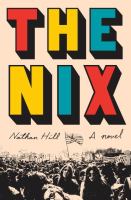 In 2004 Nathan Hill’s car was broken into and his valuables stolen, including a hard drive containing all of the short stories he hoped to some day land with a publisher. More than a decade later, Hill’s award-worthy debut novel The Nix feels like recompense for that loss.
The Nix centers around a washed-up English professor, Samuel Andresen-Anderson, who opts for immersing himself in a virtual gaming world of elves and dragons over attempting to write his commissioned novel. Samuel’s jaded existence is interrupted when he identifies a woman charged with assault for throwing rocks at a politician as his estranged mother Faye, who abandoned him when he was 11 with no explanation. With the aid of his gaming buddy Pwnage, Samuel excavates Faye’s troubled past and untangles his own early trauma in the process. Samuel’s coming of age in the 1980s Midwest is deftly interwoven with Faye’s own formative years as a 1960s radical in Chicago (Allan Ginsberg and Walter Cronkite make appearances) as we learn that the story of a neglectful mother is more nuanced than it first appears to be. The book begs the question: what do we do with inherited trauma if not pass it on to the next generation? Fans of Donna Tartt, John Irving, and Jonathan Franzen should take note.
Rating: * * * * * One of the best
Check our catalog
Reviewed by: Susannah B.
Comments Off on Book Review: The Nix, by Nathan Hill
Filed under General Fiction, Staff Picks
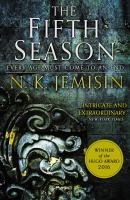 In a land called the Stillness—a single continent atop unstable fault lines—civilizations have risen and fallen attempting to survive frequent seismic activity. Among the land’s inhabitants are stills, non-magical humans, and orogenes, who can quell tremors and harness seismic power. As the Stillness experiences a cataclysm that will throw it into an extended period of ash and darkness, one orogene sets out to find her abducted daughter. This is speculative fiction at its best: a compelling narrative with parallels to the real world. Jemisin’s world building is masterful, rooted in the geography and history of the Stillness. She deftly uses her prose to draw readers into this world, to develop complex characters, and to examine the ways society oppresses and dehumanizes its people. The first installment of the Broken Earth series, The Fifth Season won the 2016 Hugo Award for best novel.
Rating: * * * * * One of the best
Check our catalog
Reviewed by: LW
Comments Off on Book Review: The Fifth Season, by N.K. Jemisin
Filed under Fantasy, General Fiction, Science Fiction, Staff Picks
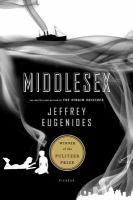 Narrated by Calliope/Cal Stephanides, this novel combines the story of one Greek-American family and one of its members. The first half of the story follows Desdemona and Lefty as they narrowly escape death in Smyrna, Turkey and immigrate to Detroit in the early 1920s. The rise and decline of 20th century Detroit is seen through the family’s eyes. The second part of the novel focuses on Cal’s growing up and how she discovers that she is really he. This section seemed too drawn out and in spite of the uniqueness of Cal’s anatomy, more ordinary with its focus on adolescent self-awakening. Middlesex won the Pulitzer Prize for fiction in 2003 and was an Oprah Book Club choice in 2007.
RATING: * * * A good read
Check our catalog
Reviewed by: kh
Comments Off on Book Review: Middlesex, by Jeffrey Eugenides
Filed under Award Winners, General Fiction, Staff Picks
I hadn’t read this classic of American literature and having re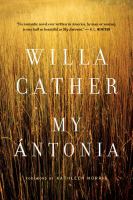 ad it, I really enjoyed it. Just under a century old, it shows its age in a scene with a blind black American singer that would be written differently today. Otherwise this novel has an up to date feel in the themes of immigrants being welcome or not in our country. Antonia and her family are from Bohemia and are trying to make a living on the Nebraska plains. Their farm is next to Jim Burden’s family farm and 9-year-old Jim and 13-year-old Antonia become fast friends. Cather’s descriptions of the Plains are lyrical, the characters sympathetic, and the plot held my interest. Considered a masterpiece of the American novel, it was enthusiastically received when published in 1918.
RATING: * * * * Very, very good
Check our catalog
Reviewed by: kh
Comments Off on Book Review: My Ántonia, by Willa Cather
Filed under General Fiction, Uncategorized
 This is the 21st Hannah Swenson mystery and includes 21 delicious-sounding recipes to try when the weather is cooler! This time Hannah has been selected to appear on the Food Channel’s Dessert Chef contest and she is eager to win and have some of the TV show segments taped in her home town, Lake Eden, Minnesota. Also, to be determined, will Hannah make it to the altar to wed sweetheart Ross or will cold feet, her affection for former boyfriends Mike and Norman, or even chasing down a murderer derail the wedding plans? Read this one when you need a break from election politics and other scary things.
RATING: * * * A good read
Check our catalog
Reviewed by: kh
Comments Off on Book Review: Wedding Cake Murder, by Joanne Fluke
Filed under General Fiction, Mysteries and Thrillers, Staff Picks
If you liked this book, try this movie/If you liked this movie, try this book!
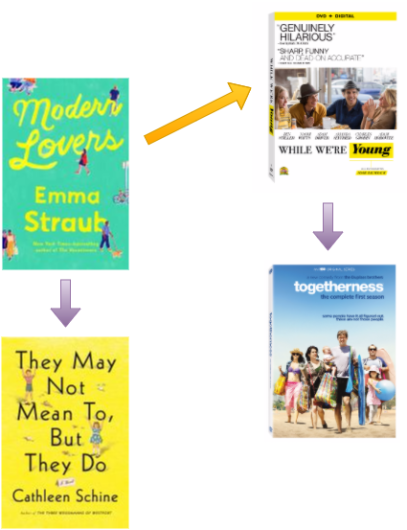
Read Modern Lovers by Emma Straub because: it shrewdly captures modern adulthood in gentrified Brooklyn. The book follows a close-knit group of Oberlin alums as they stumble through parenthood, entrepreneurship, and self-discovery well beyond young adulthood…and because it reads as fast as popcorn. Read-alike: They May Not Mean To, But They Do by Cathleen Schine
Watch While We’re Young because: Ben Stiller and Naomi Watts play a couple verging on middle age who attempt to reproduce their youth by latching on to painfully hip Brooklynites played by Adam Driver and Amanda Seyfried. Watch-alike: Togetherness: The Complete First Season
What you will find in both: mid-life crises, kombucha, and progressive schools.
Comments Off on Read/Watch Alike: Modern Lovers + While We’re Young
Filed under General Fiction, Reader Resources, Staff Picks
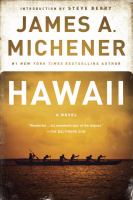 First published in 1959 and clocking in at well over 900 pages, this novel has stood up to the test of time. Michener, as was his pattern in his series of historical novels, starts with a section on the geological history of Hawaii which I skimmed through. He then tells the history of Hawaii through the stories of various families who came to the islands. The first, a Polynesian group, travel in canoes from Bora Bora, a journey of thousands of miles which they undertook in the ninth century. They find the islands beautiful and fertile and are the first people to live there. The author then jumps ahead to the New England based missionaries who come to Hawaii in the 1820s along with the whaling ships with their crews with their years long voyages. Their descendants become the economic and social ruling class who imported the Chinese and Japanese laborers to work on the sugar and pineapple plantations. The laborers’ children and grandchildren had to struggle to be accepted as full members of Hawaiian society and experienced many problems of racism in their fight. I found this book interesting and an easy way to absorb the history of our 50th state.
RATING: * * * * Very, very good
Check our catalog
Reviewed by: kh
Comments Off on Book Review: Hawaii, by James Michener
Filed under General Fiction, Historical Fiction, Staff Picks
 Ove is a very grouchy,depressed man of 59. Over the course of this novel we learn why he is testy and the very good qualities he also has. He lives in a row house in Sweden and luckily for him, some new neighbors, Parvaneh and Patrick and their two children, move in next door. Definitely a charming, feel-good book about the redemptive power of love and relationships in the manner of The Guernsey Literary and Potato Peel Pie Society.
RATING: * * * * Very, very good
Check our catalog
Reviewed by: kh
Comments Off on Book Review: A Man Called Ove, by Fredrik Backman
Filed under General Fiction, Staff Picks
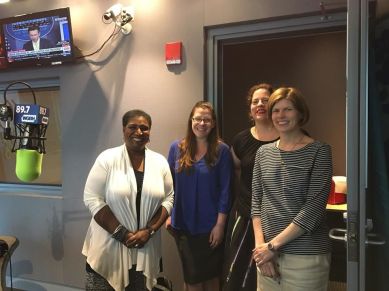 Ask a Librarian: What Should I Read This Summer? Our Assistant Library Director, Jill Graboski, and colleagues Julie Roach (Cambridge Public Library) and Robin Brenner (Brookline Public Library), spent time at the WGBH studio chatting with “Under the Radar” host Callie Crossley about their favorite books and what’s happening at their libraries this summer.
Fiction, Non-Fiction, Mystery, and Sports titles, from the Boston Globe.
Twelve new and six not-so-new suggestions, from the New York Times.
Best Summer Books, 2016, from Publishers Weekly
37 Books We’ve Loved So Far in 2016: Summer Reading from the Washington Post
21 Books by Women You Have to Read This Summer, from Redbook
Ultimate Summer Reading List, from Harper’s Bazaar
The 30 Best New Books for Summer 2016, from Good Housekeeping
5 Books to Read This Summer, recommended by Bill Gates
The Canadian perspective: CBC Books Summer 2016 Reading List
18 Incredible Books You Need to Read This Summer, from BuzzFeed
And don’t forget the resources on the Library’s Reading Recommendations page!
HAPPY READING!
Comments Off on Ideas for Summer Reading: Lists and More Lists!
Filed under Lists



 Newton Staff Recommends...
You must be logged in to post a comment.